 FGX Realty
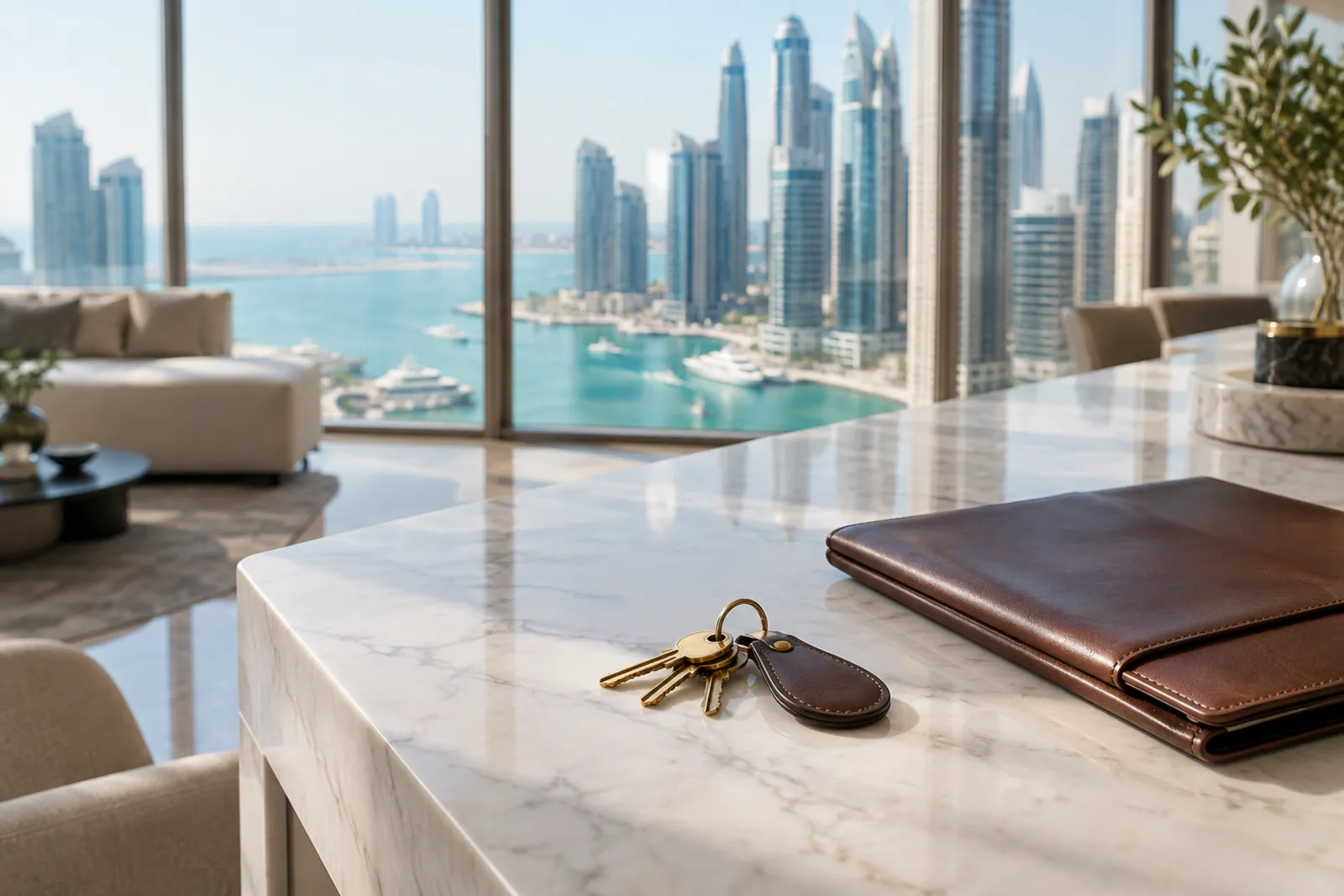
In Dubai, a foreign buyer can own property outright in designated areas, register it in their own name and complete the purchase without living in the country. The process is well regulated and usually quick, but it has its own vocabulary (MOU, NOC, Oqood, trustee office) and a few moments where money changes hands that you should understand before you sign anything. This guide follows the whole route, from deciding where to look to holding a title deed.
Where foreigners can buy in Dubai
Foreign nationals can buy freehold property in areas designated for non-UAE ownership. These zones were first set out in Regulation No. 3 of 2006 and have been extended since, and today they cover most of the communities international buyers actually consider, including Dubai Marina, Downtown Dubai, Palm Jumeirah, Business Bay, Dubai Hills Estate and Jumeirah Village Circle. You can compare the communities we cover on the areas page.
Freehold means you own the unit indefinitely and can sell it, lease it, mortgage it or pass it on. Ownership is recorded by the Dubai Land Department (DLD), and the title deed is issued electronically. You do not need a UAE residence visa to buy, and you can buy alone, jointly with other people, or in some cases through a company.
Three points worth settling early:
- Confirm the building or plot is freehold and that the seller is the registered owner. Our guide on how to verify a Dubai listing shows how to check this yourself.
- Buying through a company changes the documents required and can narrow your mortgage and visa options. Take legal advice before you choose that structure.
- Owning property does not automatically give you residency. Property-linked visas have their own thresholds, covered in the FAQ below.
Before you start: budget, finance and paperwork
Budget for more than the price
On a ready (resale) property bought with cash, plan for roughly 6 to 7 percent on top of the price. That covers the DLD transfer fee of 4%, the trustee office fee, title deed charges, and a 2% agent commission plus 5% VAT on that commission. A mortgage adds registration and bank fees. The full breakdown, with a worked AED 2,000,000 example, is in the real cost of buying property in Dubai.
Decide how you will pay before you search
If you need finance, get a mortgage pre-approval before you make offers. The UAE Central Bank sets the maximum loan-to-value (LTV) every lender must respect:
| Buyer and property | Maximum loan |
|---|---|
| Expat, first home, up to AED 5M | 80% of value |
| Expat, first home, above AED 5M | 70% of value |
| Expat, second home or investment | 60% of value |
| Any buyer, off-plan property | 50% of value |
UAE nationals have slightly higher limits. Non-residents are not a separate category in the regulation, so each bank sets its own policy, and those policies are usually more conservative. Banks generally expect the down payment and the purchase fees to come from your own funds. Our Dubai mortgage guide covers debt burden limits, documents and fixed versus variable rates.
Documents you will need
- A valid passport for every buyer, plus an Emirates ID if you are a UAE resident.
- Evidence of where the money comes from. Brokers, trustee offices and banks all work under UAE anti-money-laundering rules and will ask.
- For a mortgage: salary certificate or company documents, recent bank statements and the bank's own application forms. Requirements vary by bank and by whether you are salaried, self-employed or non-resident.
- If someone will sign on your behalf: a power of attorney that is notarised and, if signed outside the UAE, legalised for use in the UAE, usually with an Arabic translation.
Buying a ready property, step by step
1. Shortlist against a clear brief
Fix your budget ceiling, must-haves and whether the property is for living in, renting out or both. The yield, service charge and tenant profile of a studio in Arjan and a family villa in Dubai Hills Estate are completely different, so the brief drives everything else. The property assistant is a quick way to narrow down areas and property types that fit.
2. Work with a registered broker
Every Dubai broker must be registered with the Real Estate Regulatory Agency (RERA), and every advert must carry a DLD advertising permit with a QR code. Before you share documents or money, check the agent's Broker Registration Number (BRN) and the office's ORN. A buyer usually signs a standard buyer-broker agreement (RERA Form B), which records the commission.
3. Agree terms and sign the MOU
Once the price is agreed, buyer and seller sign a memorandum of understanding, the standard RERA Form F. It records the price, the deposit, the target transfer date, who pays which fees and what happens if either side withdraws. By market convention the buyer gives a security deposit, commonly 10% of the price, usually as a cheque held by the brokerage until transfer. Read the default clauses carefully; they decide who loses money if the deal collapses.
4. NOC, valuation and mortgage clearance
The seller applies to the developer for a No Objection Certificate (NOC), which confirms there are no unpaid service charges and that the developer does not object to the transfer. If you are borrowing, your bank values the property and issues the final offer. If the seller has a mortgage, their bank issues a liability letter showing the amount needed to clear it, and that amount is settled on transfer day.
5. Transfer at a trustee office
The transfer happens at a Real Estate Registration Trustee office, an accredited partner of DLD. Both parties (or their attorneys) bring identification, the NOC and manager's cheques: one to the seller for the balance, one to the seller's bank if there is a mortgage, and one for the DLD fee. Once the fees are paid and DLD's auditor approves the transaction, the new title deed is issued electronically in your name. On the day itself, the registration usually takes well under an hour if everything is in order.
| Stage | Cash purchase | With a mortgage |
|---|---|---|
| Offer to signed MOU | A few days | A few days |
| Developer NOC | Often 1 to 2 weeks | Often 1 to 2 weeks |
| Bank valuation and final offer | Not needed | Often 2 to 4 weeks |
| Transfer at trustee office | One appointment | One appointment |
| Typical total | Around 3 to 5 weeks | Around 5 to 8 weeks |
These are common ranges, not promises. Developer NOCs, the seller's bank and holidays set the pace.
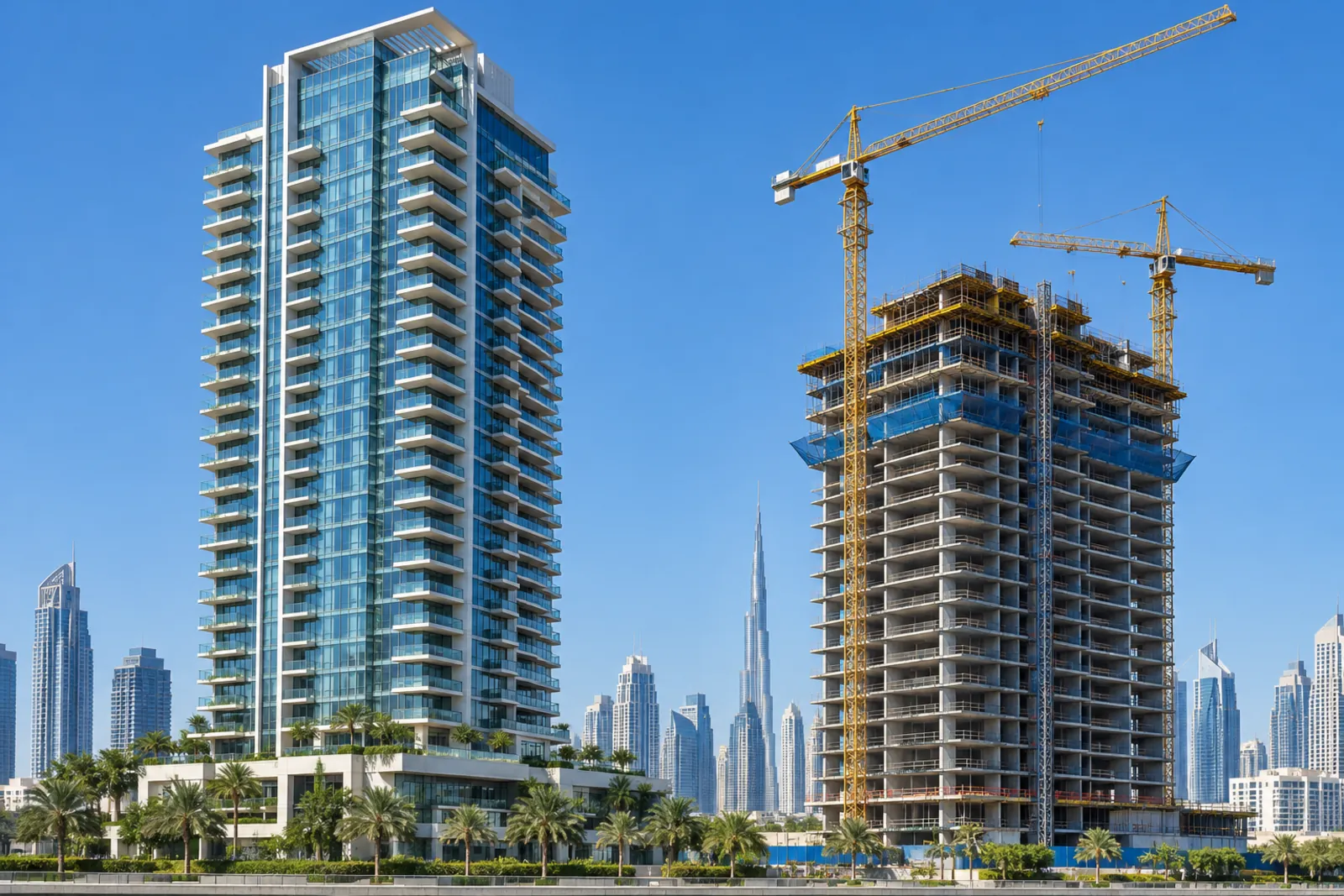
Buying off-plan from a developer
Buying direct from a developer follows a different path, and the protections come from specific laws rather than the MOU.
- Reservation. You choose a unit and pay the booking amount set by the payment plan, together with the DLD registration fee of 4% of the price and the developer's admin charges.
- Sale and purchase agreement (SPA). The developer issues the SPA, which sets the price, payment schedule, completion date and default terms.
- Oqood registration. The developer registers the sale on DLD's interim register (Oqood). Under Law No. 13 of 2008, an off-plan sale that is not entered in that register is void, so make sure you receive the Oqood certificate.
- Instalments. You pay instalments into the project's escrow account, which by law can only be used for building that project.
- Handover. You pay the final instalment, inspect the unit for defects, take the keys, and the developer registers the completed unit so the title deed can be issued.
When you buy off-plan from a developer through a broker, the developer normally pays the broker's commission, so there is no 2% agent fee on your side. Before choosing a project, read our comparison of off-plan vs ready property, which also covers payment plans, escrow and resale before handover.
The First-Time Home Buyer Programme
UAE residents buying their first Dubai home should look at DLD's First-Time Home Buyer Programme. According to DLD, it is open to residents of any nationality aged 18 or over who do not currently own freehold residential property in Dubai and are buying a property below AED 5 million. Benefits include priority access to launches from participating developers, preferential prices on some off-plan units, interest-free instalments for DLD registration fees through eligible credit cards, and better mortgage terms from participating banks. You register through the DLD website or the Dubai REST app and receive a QR code to use with those partners. It is not available to non-residents.
Mistakes that cost foreign buyers money
- Paying a deposit by bank transfer to an individual, or before an MOU or SPA exists.
- Looking only at the price and ignoring annual service charges, which can take a large slice of rental income. Always ask for the building's current RERA-approved rate before you offer.
- Assuming fees can be added to the mortgage. Most banks expect the 4% DLD fee and other costs to come from your own money.
- Leaving currency transfers to the last week. Manager's cheques are drawn on a UAE bank account, so allow time for international transfers and any bank compliance checks.
- Signing an SPA without reading the completion date, grace period and late payment clauses.
The safest Dubai purchase is a boring one: a registered broker, a permit on the advert, a standard RERA contract, and money moving only by manager's cheque or into a project escrow account.
Frequently asked questions
Do I need to be in Dubai to buy?
No. You can appoint someone under a properly notarised and legalised power of attorney to sign the MOU and attend the transfer. Off-plan purchases are often completed largely online, although some developers and banks will still want identity checks.
Can a non-resident get a mortgage?
Yes, several UAE banks lend to non-residents, but expect a lower loan-to-value than residents receive, more documentation and fewer lenders to choose from. Get an indication from a bank or broker before you make an offer.
How long does a purchase take?
A straightforward cash resale often completes within three to five weeks of signing the MOU. With a mortgage, allow roughly five to eight weeks. Off-plan purchases take as long as construction does, with handover dates set in the SPA.
Does buying property give me a visa?
Property worth AED 2 million or more can support an application for the 10-year Golden Visa, and lower-value property can support a two-year investor visa, subject to conditions. The rules, documents and fees are in our Golden Visa guide.
Who pays the 4% DLD transfer fee?
By market convention the buyer pays it, but it is a negotiable point and should be written into the MOU.
Official sources
- Dubai Land Department e-services
- DLD First-Time Home Buyer Programme
- UAE Central Bank mortgage regulations: important ratios
- Law No. 13 of 2008 on the interim real property register%20of%202008.html)
Next step
If you are starting a search, the easiest first step is a short call with an FGX advisor to set the budget, finance route and shortlist of areas. You can book a call or viewing whenever you are ready.
This guide is general information, not legal, tax or financial advice. Rules and fees change; confirm current figures with the Dubai Land Department or your advisor before you commit.