 FGX Realty
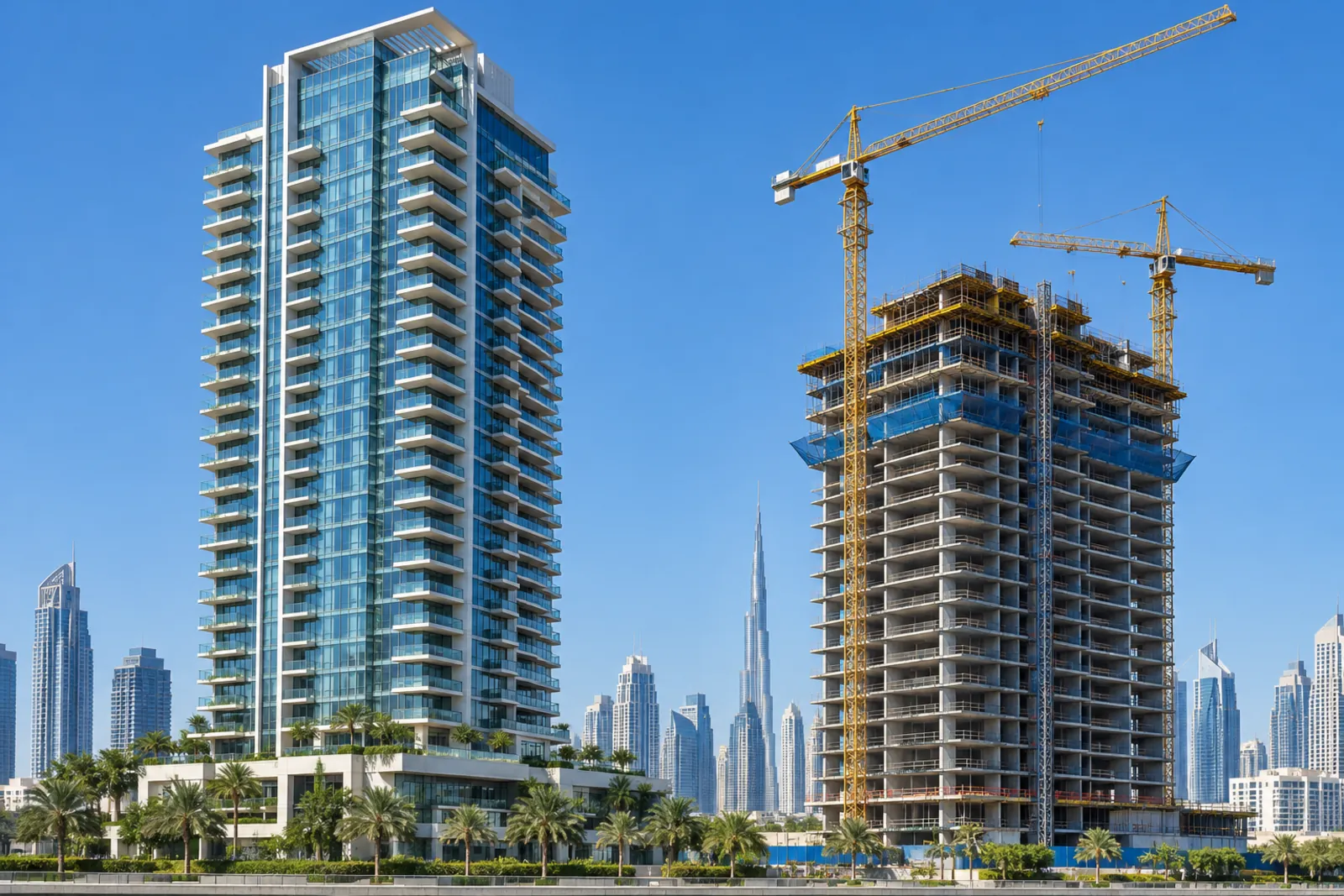
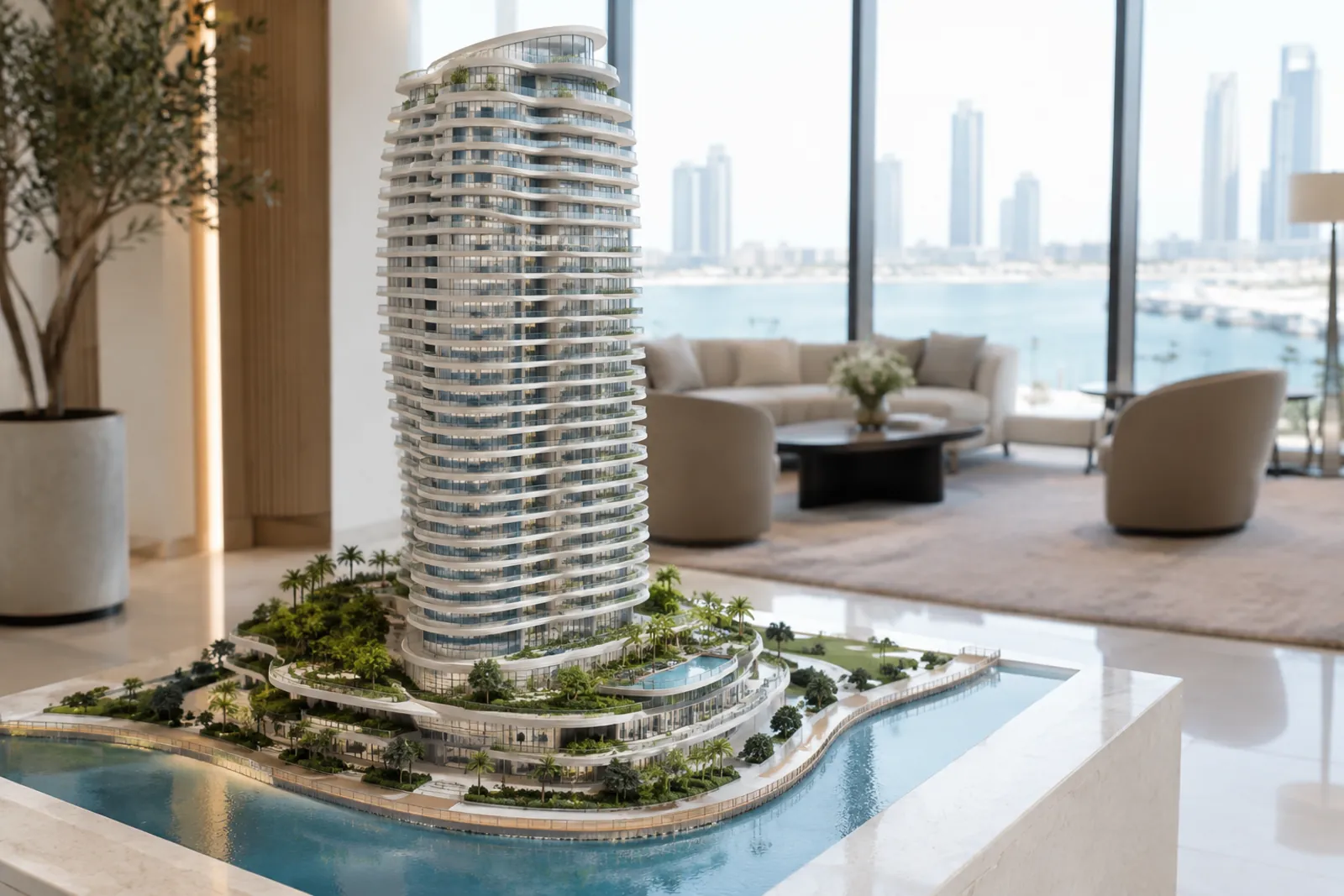
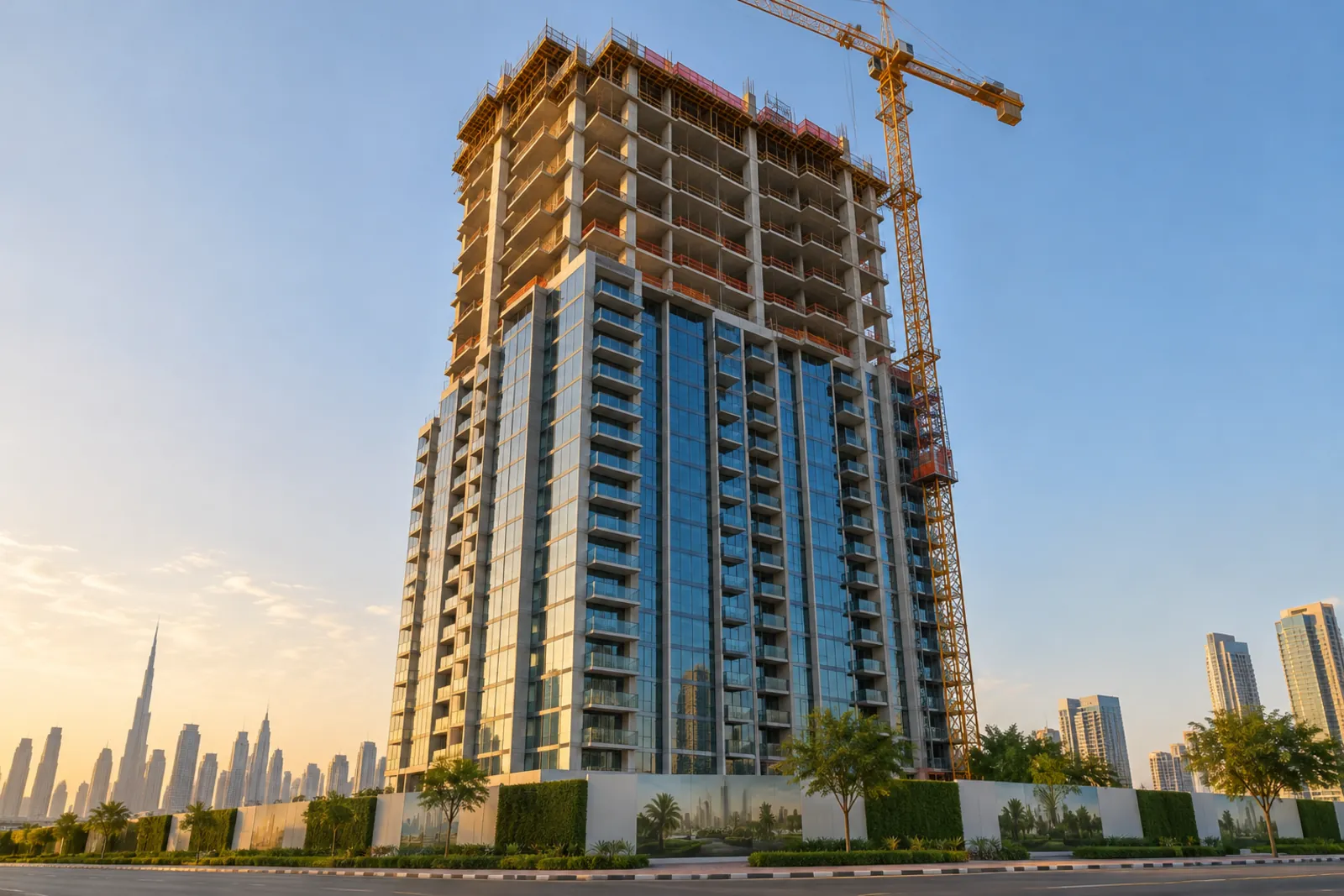
Off-plan and ready property are not better or worse than each other. They are different instruments: one is a staged commitment to a building that does not exist yet, the other is an income-producing asset you can inspect today. The right choice depends on your cash flow, your timeline and how much uncertainty you are comfortable carrying. Here is a side-by-side comparison, followed by the risks, the numbers and who each option tends to suit.
The comparison at a glance
| Factor | Off-plan | Ready |
|---|---|---|
| What you buy | A unit under construction, registered on Oqood | A completed unit with a title deed |
| Cash at the start | First instalment plus the 4% DLD fee | Full price, or deposit plus fees with a mortgage |
| Paying the balance | Developer instalments, often linked to construction | Cash or a mortgage on transfer day |
| Bank finance | Capped at 50% LTV during construction | Up to Central Bank limits (80% for an expat's first home up to AED 5M) |
| Rental income | None until handover | From the first tenancy |
| Agent commission | Usually paid by the developer | Usually 2% plus VAT for the buyer |
| What you can inspect | Plans, show units, specifications | The actual unit, building and service charge history |
| Main risks | Delay, specification changes, value at handover, resale limits | Condition, hidden defects, overpaying |
Why buyers choose off-plan
Staged payments. You commit to the full price but pay it over the construction period, often two to four years. That spreads the cash requirement and, if values rise during construction, gives you exposure to the whole price for a fraction of the capital.
New stock and choice. At launch you can pick the floor, view and layout. Newer communities with heavy launch activity, such as Dubai Creek Harbour, Dubai South and Dubai Islands, are largely accessible this way.
No commission and flexible terms. Buying direct from the developer avoids the 2% resale commission, and developers compete on payment plans, sometimes including post-handover instalments or contributions toward the DLD fee.
New-build cover. The SPA normally includes a defects period after handover, and UAE civil law places a 10-year liability on contractors and architects for structural defects that threaten a building's stability.
The risks of off-plan, and how they are managed
Delay
Completion dates in SPAs are usually anticipated dates with a grace period. Your payments go into a project escrow account that can only be used for that project's construction, and if RERA cancels a project, Law No. 19 of 2020 requires the developer to refund buyers' payments through the escrow mechanism. That protects your money; it does not protect your timeline. Check the developer's record on previous handovers before you commit. The full legal framework is in how Dubai protects off-plan buyers.
What you get differs from the brochure
The SPA, not the brochure, defines the unit. Read the specification schedule and the area clause. Law No. 13 of 2008 says the developer cannot charge more if the delivered area is larger, and must compensate you if it is smaller, unless the difference is inconsequential.
Value and finance at handover
If your plan has a large payment due on completion, you will need cash or a mortgage at that point. The bank will value the unit at handover, not at launch, and lend against the lower of price and valuation. If prices have softened, you fund the gap.
Selling before completion
You can usually sell an off-plan unit before handover, but developers typically allow it only after you have paid a set percentage of the price, defined in the SPA. The buyer pays DLD's 4% again on the resale price, and the developer may charge a fee for the NOC. Law No. 13 of 2008 limits developers to administrative costs approved by DLD on resales, but those costs still vary by developer.
No income in the meantime
Until handover, your capital earns nothing. Factor that into any comparison with a ready unit that would be producing rent from the first month.
Why buyers choose ready property
- Income from day one. You can lease the unit immediately, or move in.
- What you see is what you get. You can inspect the actual unit, the building's condition, the management quality and the RERA-approved service charges.
- Higher bank finance. An expat buying a first home up to AED 5 million can borrow up to 80%, compared with 50% on off-plan.
- Evidence instead of forecasts. Achieved rents and resale prices in the same building are visible, so your yield estimate rests on data.
- Simpler visa and mortgage paperwork. A title deed is the cleanest document for a Golden Visa application or a bank.
- Room to negotiate. Resale sellers are individuals with their own timelines, and a well-prepared buyer can often negotiate on price.
The cash picture on a AED 1,500,000 purchase
These illustrations use the standard DLD fee of 4%, a trustee fee of AED 4,200, about AED 580 in title deed and map fees, 2% commission plus VAT on the resale, and mortgage registration at 0.25% of the loan plus about AED 290. Bank fees are excluded.
| Stage | Off-plan, 60/40 plan | Ready, with 80% mortgage |
|---|---|---|
| At booking or transfer | 150,000 (10%) + 60,000 DLD | 300,000 deposit + 99,570 fees |
| During construction | 750,000 (50%) in instalments | Nothing further |
| At handover | 600,000 (40%) from cash or a mortgage | Already complete |
| Rent received before handover | None | From the first tenancy |
The off-plan buyer needs about AED 210,000 at the start rather than about AED 400,000, but must keep funding instalments for several years with no income, and arrange the final 40% at handover. The ready buyer pays more on day one and services a mortgage, but collects rent immediately. Neither is cheaper in absolute terms; they move cash at different times. Our guide to off-plan payment plans shows how 70/30, 50/50 and post-handover plans change this pattern.
Yields and cash flow
A ready unit's yield can be estimated from current rents in the same building and the RERA-approved service charge. An off-plan unit's yield is a forecast: rents at handover, lease-up time, furnishing costs and the final service charge are all unknown at purchase. New buildings in a community often hand over in clusters, which can mean many similar units competing for tenants at the same time. See rental yields by area for how gross and net yields are calculated.
If you need income now, buy ready. If you have steady cash flow, a multi-year horizon and the stomach for construction risk, off-plan can stretch your capital further.
Who each option tends to suit
Off-plan usually suits
- Buyers with dependable income who can meet instalments for several years without relying on rent.
- Investors with a horizon of five years or more who want new stock in growing communities.
- End-users who are happy to wait for a specific layout or location.
Ready usually suits
- Buyers who need a mortgage at more than 50% LTV.
- Investors who want rental income immediately.
- Families relocating on a fixed date.
- Buyers who want a title deed now, for example for a Golden Visa application.
A middle route
Units close to handover, either from the developer or as resales from early buyers, combine some of both: a short wait, a building you can largely see, and often a smaller remaining balance. They are worth asking about if neither extreme fits.
Questions to ask yourself before choosing
- Can I make every payment without the rent? Off-plan instalments arrive whether or not your other plans work out.
- How will I fund the handover balance? Savings, a mortgage the bank has confirmed it will offer on this project, or the sale of another asset.
- When do I need the property? If you need to live in it or let it within a year, a ready unit is the realistic choice.
- How long will I hold it? Transaction costs and resale restrictions make very short holding periods expensive either way.
- What would I do if prices fell 10% before handover? If the answer is "be forced to sell", the plan is too tight.
Frequently asked questions
Is off-plan cheaper than ready?
Launch prices can be lower than comparable completed units, and there is no 2% commission when you buy from the developer. But you carry construction risk and receive no rent until handover, so compare total cost and timing, not the headline price.
Can I sell an off-plan unit before completion?
Usually yes, once you have paid the percentage the developer requires in the SPA. The buyer pays the 4% DLD fee on the resale price.
What happens if the developer is late?
Your rights depend on the SPA's completion date, grace period and any compensation clause. Payments sit in escrow, and if a project is cancelled by RERA, the law requires a full refund. Delays short of cancellation are a contractual matter.
Can I get a mortgage on off-plan property?
During construction, banks lend at most 50% of the value, and only on projects they approve. After completion, the unit is usually assessed like any ready property. See our mortgage guide.
How do I check a developer's track record?
Look at completed projects, handover dates against original targets, and the build quality of buildings already occupied. The developers page is a starting point for the developers most active in Dubai today.
Official sources
- Law No. 13 of 2008 on the interim real property register%20of%202008.html)
- UAE Central Bank: mortgage loan-to-value limits
Next step
If you are deciding between a launch and a ready unit, an FGX advisor can put two or three real options side by side with their full payment schedules. Book a call, or browse off-plan and ready listings to see what is available now.
This guide is general information, not legal, tax or financial advice. Rules and fees change; confirm current figures with the Dubai Land Department or your advisor before you commit.