 FGX Realty
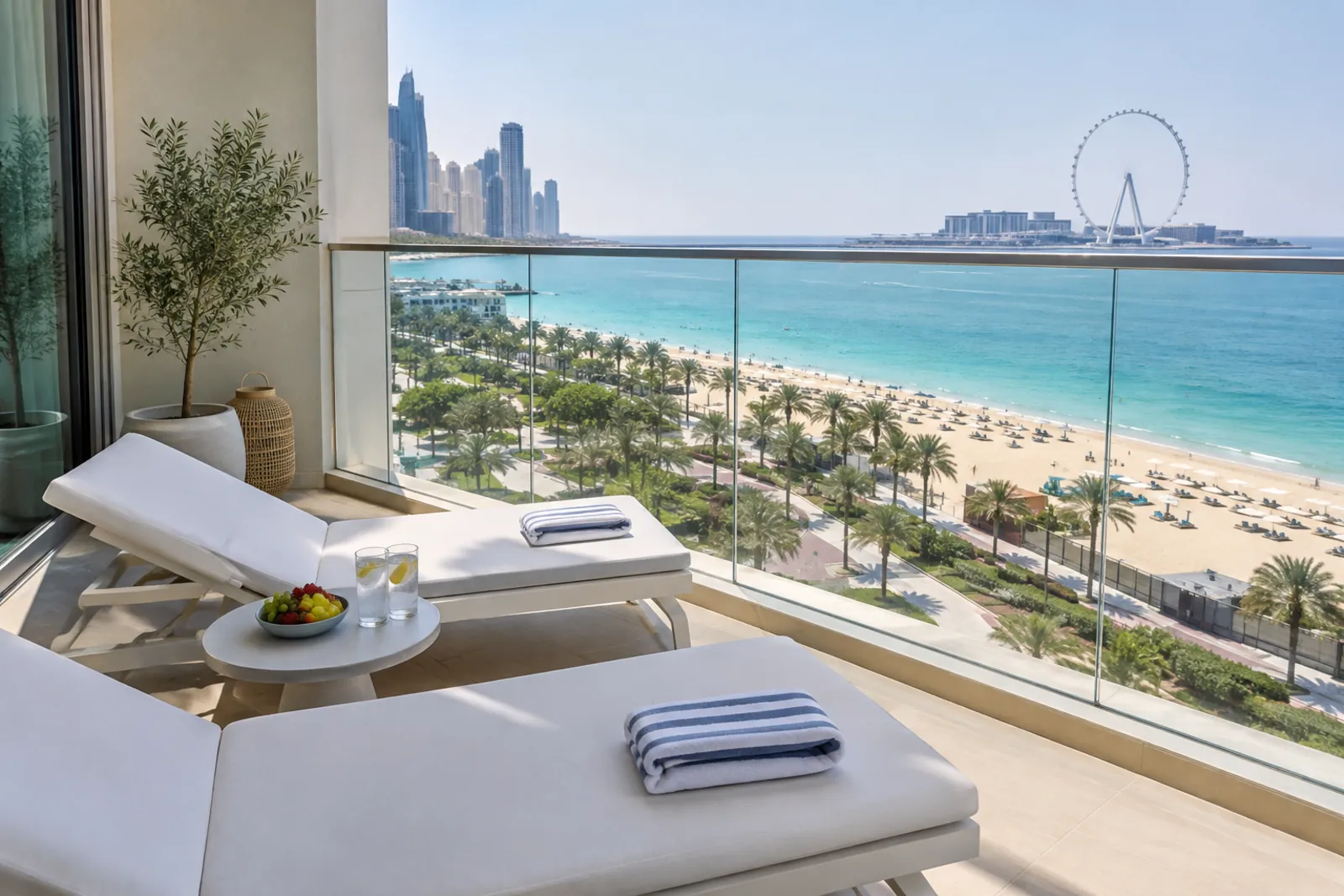
Letting a Dubai apartment or villa by the night is legal, popular and regulated. Every unit used as a holiday home needs a permit from the Department of Economy and Tourism (DET), guests pay a Tourism Dirham fee, and the unit has to meet DET's standards and pass inspection. This guide covers eligibility, the choice between managing it yourself and using a licensed operator, the registration steps, the fees (including the 2026 fee relief), and how the economics compare with a long-term let.
The rules behind it
Short-term letting in Dubai is governed by Decree No. 41 of 2013, which regulates the leasing of holiday homes and requires a licence to carry out the activity. Fees and fines are set by Executive Council Resolution No. 49 of 2014, and the Tourism Dirham charged to guests by Resolution No. 2 of 2014. DET, formerly the Department of Tourism and Commerce Marketing, administers the system through its online Holiday Homes portal.
Is your property eligible?
According to the requirements summarised by Gulf News from DET's guidance:
- Title deed classification. Apartments must be classified as "Residential" on the title deed. Villas or houses in gated communities can be "Residential" or "Commercial".
- Excluded properties. Permits are not issued for units classified as hotel rooms or hotel apartments, or for properties whose sale and purchase agreement prohibits short-term rental.
- Developer or community consent. DET asks for a No Objection Certificate from the developer where applicable, and building or community rules can restrict short-term letting even where DET would issue a permit. Check the community's rules before you buy for this purpose.
- Insurance. You need a comprehensive policy from a Dubai-licensed insurer covering damage and injury to guests, valid for the full permit period.
If you rent the property rather than own it, you will also need the owner's written consent.
Managing it yourself or using an operator
DET allows two routes.
As an individual owner
You register on the portal as the property owner, using your Emirates ID, and run the unit yourself: listings, pricing, guest communication, check-ins, cleaning, maintenance, collecting and remitting the Tourism Dirham, and keeping the unit up to DET's standards. This route suits owners who live in Dubai, have one or two units and want to keep the operator's share of revenue.
Through a licensed holiday home operator
A company holding a DET holiday home licence registers and runs the unit on your behalf, and you sign a property management letter (a template is available on the portal). Operators charge a share of revenue, and you should compare what that share includes: cleaning, linen, maintenance, photography, pricing, guest screening and the handling of fines and complaints.
Because the owner route is built around an Emirates ID, owners who are not UAE residents generally work through a licensed operator.
How to register a unit
- Create an account on DET's Holiday Homes portal.
- Add the unit, with its type, number of bedrooms, area and developer.
- Upload the documents (list below).
- Wait for review. Gulf News reports applications are usually reviewed within one business day.
- Self-classify the unit once it appears on your dashboard, then pay the fees to move it to approved status.
- Pass inspection. DET inspects units, which must be vacant during the inspection. Violations must be corrected within two weeks, and DET may carry out unannounced inspections later.
Permits can be issued for a minimum of three months and a maximum of twelve, and Gulf News notes the fee is the same regardless of the duration chosen.
Documents
- Title deed, or a DLD-approved sale and purchase agreement.
- Developer NOC, if applicable.
- The owner's signed passport copy or Emirates ID.
- A trade licence if the owner is a company, plus the authorised signatory's ID.
- The property management letter.
- The latest DEWA bill. The application asks for the DEWA premise number, not the account number.
Fees
The standard fees are set by Resolution No. 49 of 2014:
| Item | Standard fee |
|---|---|
| Holiday home permit, issue or renewal | AED 300 per bedroom, up to AED 1,200 per unit per year |
| Classification certificate | AED 50 per unit |
| Inspection request | AED 300 per unit |
| Knowledge and innovation fees | AED 10 each |
| Operator licence, initial approval | AED 100 |
| Operator licence, issue or renewal | AED 500 |
The 2014 schedule also lists AED 1,500 for subscription to DET's e-programme, which many guides quote as a one-off registration fee.
2026 fee relief
On 21 May 2026, Dubai approved a second economic incentives package worth AED 1.5 billion. According to the Government of Dubai Media Office, it includes an exemption from permit and licence fees for holiday homes, and an exemption for DET-registered establishments from collecting the Tourism Dirham. The package's initiatives run for between three and twelve months, with each government entity announcing its own timeline. Some guides cite a holiday home waiver running from May 2026 to April 2027, but we have not seen that confirmed by DET directly, so check the fees shown in the portal when you apply.
The Tourism Dirham
Guests pay the Tourism Dirham for each occupied room for each night. Resolution No. 2 of 2014 sets it by classification:
| Holiday home category | Tourism Dirham per occupied room per night |
|---|---|
| Luxury holiday home | AED 15 |
| Standard holiday home | AED 10 |
The operator, or the owner if self-managing, collects it from guests, shows it on the guest's invoice, and pays it to DET before the 16th of the following month. It is a pass-through charge, not income. As noted above, the May 2026 package included a temporary exemption from collecting it for DET-registered establishments, so confirm the current position on the portal.
Fines to know about
Resolution No. 49 of 2014 sets the fines, which double for a repeat violation within a year, up to AED 100,000. Among them:
- Operating without a licence: AED 5,000.
- Providing false information or documents to DET: AED 5,000.
- Failing to maintain valid insurance throughout the licence: AED 2,000.
- Failing to display a notice in the unit, in Arabic and English, with the licensee's details and the unit's classification: AED 300.
Short-term or long-term: the economics
A holiday home can earn more gross income than a long-term let, particularly in areas with strong visitor demand. Gulf News, citing UAE property platform data, names Palm Jumeirah, Dubai Marina and Downtown Dubai among the most popular areas for short-term rentals. But the cost base is very different:
| Cost | Long-term let | Holiday home |
|---|---|---|
| Furnishing and replacement | Often none | Full furnishing, regular replacement |
| Utilities and internet | Usually the tenant | The owner |
| Cleaning and linen | None | Every stay |
| Management | Optional, modest | Operator share or your own time |
| Platform fees | None | Per booking |
| Vacancy | Rare once let | Seasonal, night by night |
| Service charges | Owner | Owner |
A useful approach is to estimate both on the same unit: a realistic annual occupancy and average nightly rate for short stays, minus all of the costs above, compared with a conservative long-term rent minus service charges and maintenance. Our rental yields guide shows the net yield method for the long-term side.
Short-term letting rewards active management. In the right building it can beat a long-term let comfortably; in the wrong one, furnishing, cleaning and empty nights can leave you with less.
VAT
Short-stay accommodation can fall within UAE VAT. If your taxable supplies exceed the mandatory registration threshold of AED 375,000 over twelve months, you may need to register. Take advice from a tax adviser before you start.
Before you buy for short-term letting
- Confirm the title deed classification and that the SPA does not prohibit short-term rental.
- Ask the developer or community management whether holiday homes are permitted in the building, and on what conditions.
- Check the building's service charges and how district cooling is billed, since you will pay utilities during stays.
- Look at how many units in the building already operate as holiday homes. Heavy competition in one tower can hold nightly rates down.
- Budget for furnishing to the standard guests expect in that location, plus a reserve for replacements.
- Decide early whether you will self-manage or appoint an operator, and get a written revenue and cost estimate before you commit.
Frequently asked questions
Do I need a DET permit to list on booking platforms?
Yes. Any unit let as a holiday home needs a DET permit, and platforms generally ask for the permit number.
Can I run a holiday home in any building?
No. Hotel rooms and hotel apartments are excluded, apartments must be "Residential" on the title deed, and the SPA or community rules may prohibit short-term letting. Check before you buy.
Can a non-resident owner register a holiday home?
The owner route uses an Emirates ID, so non-resident owners generally appoint a licensed holiday home operator.
How long does a permit last?
Between three and twelve months, at the owner's choice, and it must be renewed to keep operating.
What happens if I operate without a permit?
The fine for operating without a licence is AED 5,000, doubling for a repeat violation within a year, up to AED 100,000.
Official sources
- Resolution No. 49 of 2014: holiday home fees and fines%20of%202014.html)
- Resolution No. 2 of 2014: Tourism Dirham%20of%202014.pdf)
- Dubai Media Office: AED 1.5 billion incentives package, May 2026
Next step
If you are buying with short-term letting in mind, tell your advisor first so the shortlist only includes buildings where holiday homes are allowed and the numbers work. Use the map view of our listings to compare locations, or book a call to talk through a specific unit.
This guide is general information, not legal, tax or financial advice. Rules and fees change; confirm current figures with the Dubai Land Department or your advisor before you commit.